
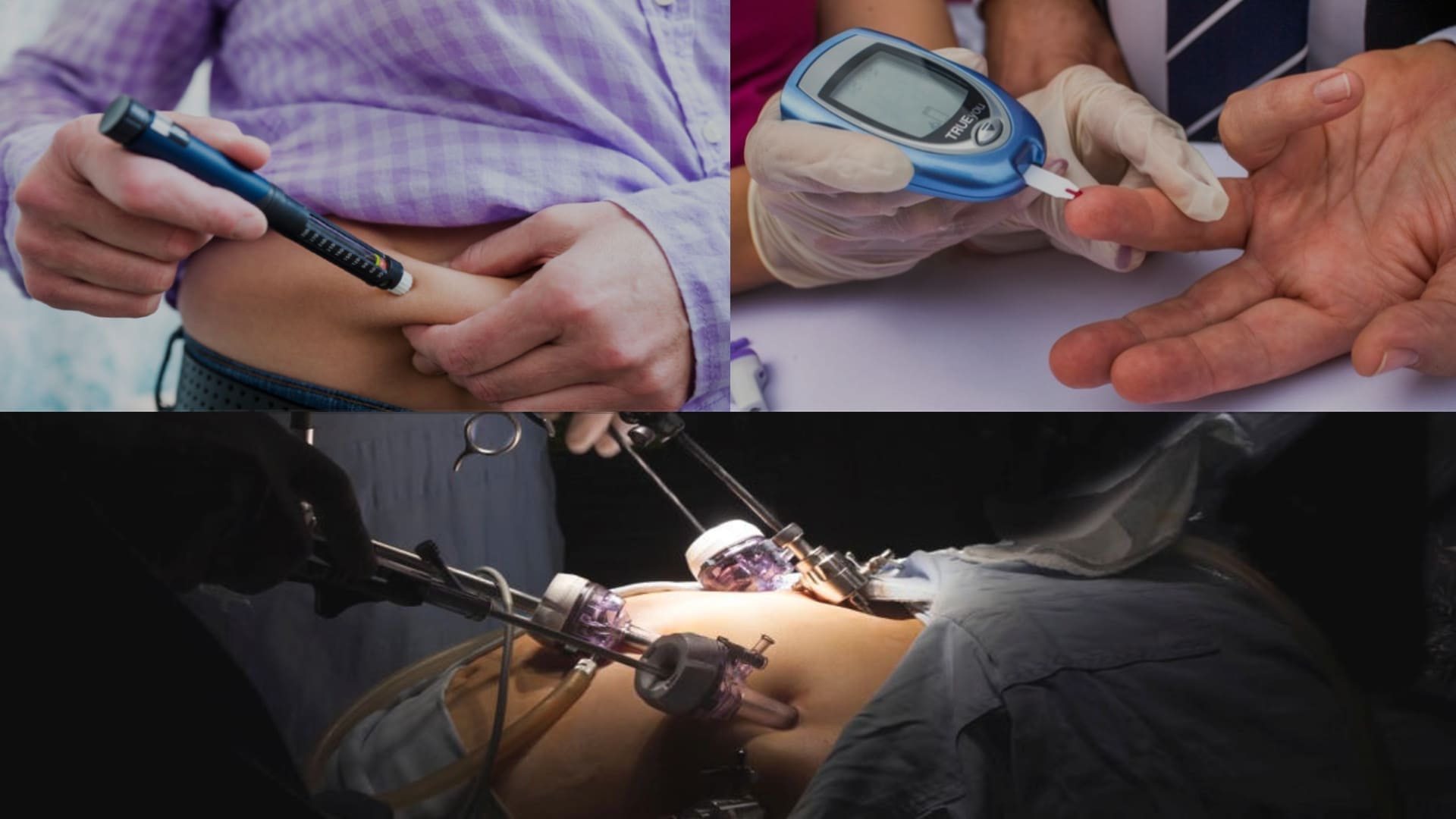
Metabolic surgery refers to surgical procedures primarily aimed at treating metabolic disorders, particularly type 2 diabetes, in patients with obesity. While these surgeries often result in weight loss, their primary goal is to improve or resolve obesity-related metabolic conditions. Common metabolic surgeries include gastric bypass and sleeve gastrectomy.
Key features of Metabolic Surgery include:
Why is it done?
Metabolic surgery is recommended for individuals with:
The primary aim is to improve or resolve metabolic conditions, particularly type 2 diabetes, often before significant weight loss occurs.
What happens during the procedure?
The specific steps depend on the type of metabolic surgery chosen (e.g., gastric bypass or sleeve gastrectomy). Generally, the procedure involves:
The surgery typically takes 1-3 hours, depending on the specific procedure. Patients usually stay in the hospital for 1-3 days post-surgery for monitoring and to begin adjusting to their new dietary requirements.
Enquire Now


