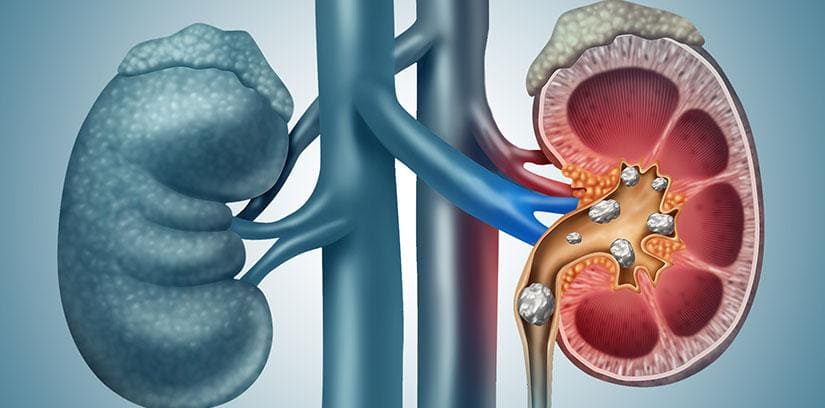
Kidney Stone
The treatment for kidney stones depends on their size, type, location, and symptoms. While some small stones pass naturally, others require medication or surgical procedures.
1. Conservative Management (Small Stones < 5mm)
- Increased fluid intake : Drinking 2–3 liters of water daily (unless restricted for medical reasons) helps flush out stones.
- Pain relievers : To reduce discomfort while passing a stone.
- Medical therapy : Certain medications (such as alpha-blockers) can help relax the ureter muscles, making it easier for stones to pass.
- Regular monitoring : Imaging and urine tests ensure the stone is moving or has passed.
2. Medical Expulsive Therapy
- Some medications may help dissolve or pass specific stones, especially uric acid stones, by altering urine pH.
- Your doctor will determine if this approach is suitable based on stone type and overall health.
3. Minimally Invasive and Surgical Procedures (For Larger or Symptomatic Stones)
a. Extracorporeal Shock Wave Lithotripsy (ESWL)
- A non-invasive procedure that uses sound shock waves to break stones into small fragments that can pass in urine.
- Usually performed under light anesthesia.
- May cause temporary side effects like blood in urine, bruising, or discomfort as fragments pass.
b. Ureteroscopy
- A thin scope (ureteroscope) is passed through the urethra and bladder into the ureter.
- The stone is either removed or broken into smaller pieces using special instruments or laser energy.
- A temporary stent may be placed in the ureter to help healing.
c. Percutaneous Nephrolithotomy (PCNL)
- Recommended for large or complex stones.
- A small incision is made in the back to access the kidney, and the stone is broken and removed using special instruments.
- Performed under general anesthesia, with a short hospital stay.
d. Laparoscopic or Open Surgery (Rare)
- Rarely needed, only if other methods fail or are not feasible.
- Involves direct removal of the stone through a surgical incision.
4. Treating Underlying Causes
- If kidney stones are linked to metabolic or hormonal disorders (like hyperparathyroidism), treating the root cause can help prevent future stones.
Enquire Now