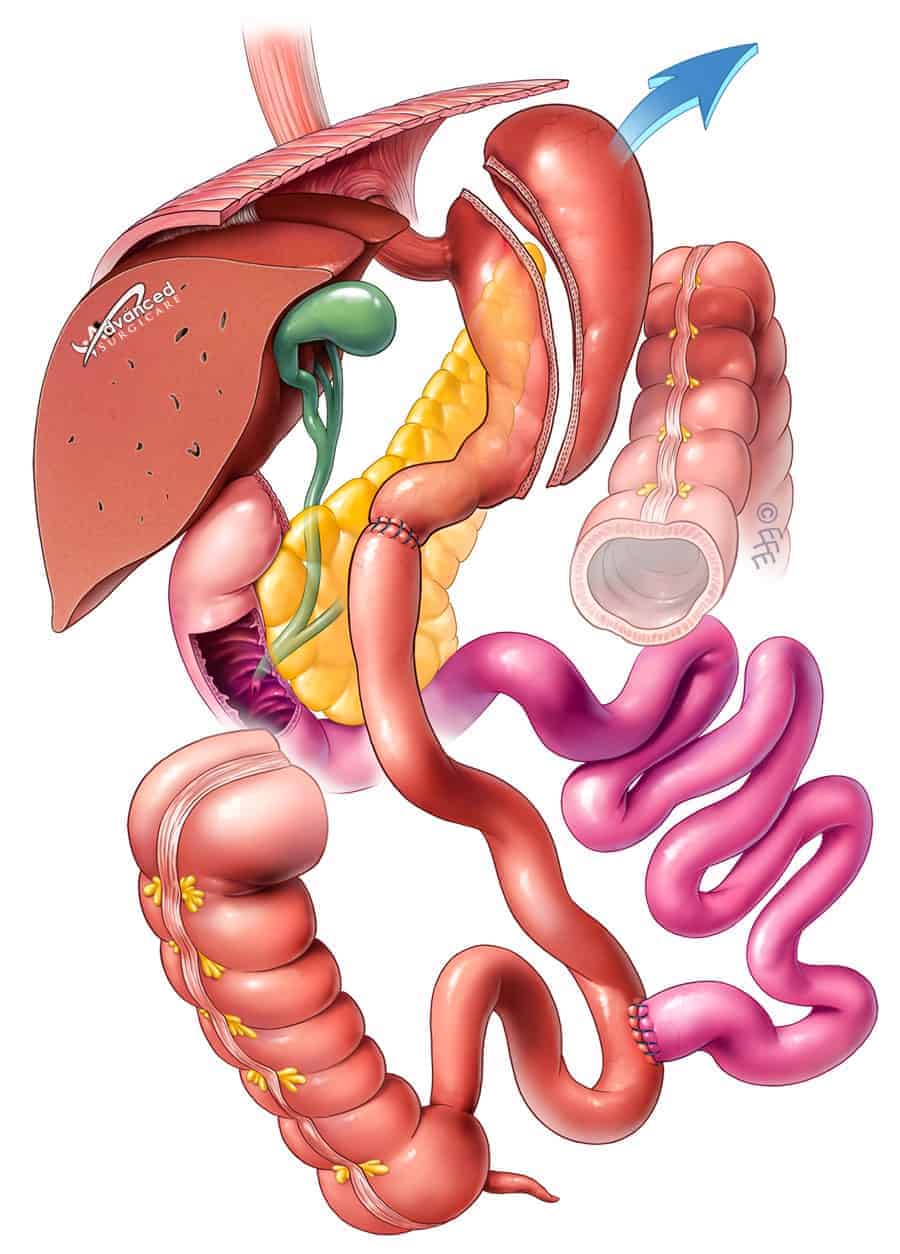
Bilio-pancreatic Diversion
Bilio-pancreatic diversion (BPD) is a complex weight loss surgery that involves removing a portion of the stomach and rerouting the small intestine. In the duodenal switch variation (BPD/DS), about 80% of the stomach is removed, and the small intestine is rearranged to separate food from digestive juices until the last portion of the small intestine. This limits both food intake and nutrient absorption.
Key features of Bilio-pancreatic Diversion include:
- Most complex and highest-risk bariatric procedure
- Results in the most significant weight loss and metabolic changes
- Requires strict adherence to dietary guidelines and lifelong supplementation
- Typically reserved for super-obese patients or those with severe metabolic disorders
Why is it done?
BPD is typically recommended for individuals with super obesity (BMI 50 or higher) or those with severe obesity-related health conditions who have not achieved success with other weight loss methods. The procedure aims to:
- Achieve significant and sustained weight loss
- Improve or resolve severe obesity-related health conditions, particularly type 2 diabetes
- Enhance overall quality of life for patients with extreme obesity
What happens during the procedure?
The BPD procedure typically involves the following steps:
- General anaesthesia is administered to the patient.
- The surgeon makes several incisions in the abdomen to insert surgical instruments.
- About 70-80% of the stomach is removed, similar to a sleeve gastrectomy.
- The small intestine is divided and rearranged, creating a longer bypass than in standard gastric bypass.
- A portion of the small intestine is connected to the remaining stomach.
- Another portion of the small intestine is connected further down, allowing digestive enzymes to mix with food.
- The incisions are closed, completing the procedure.
Enquire Now